Partnership Value (Estimated)
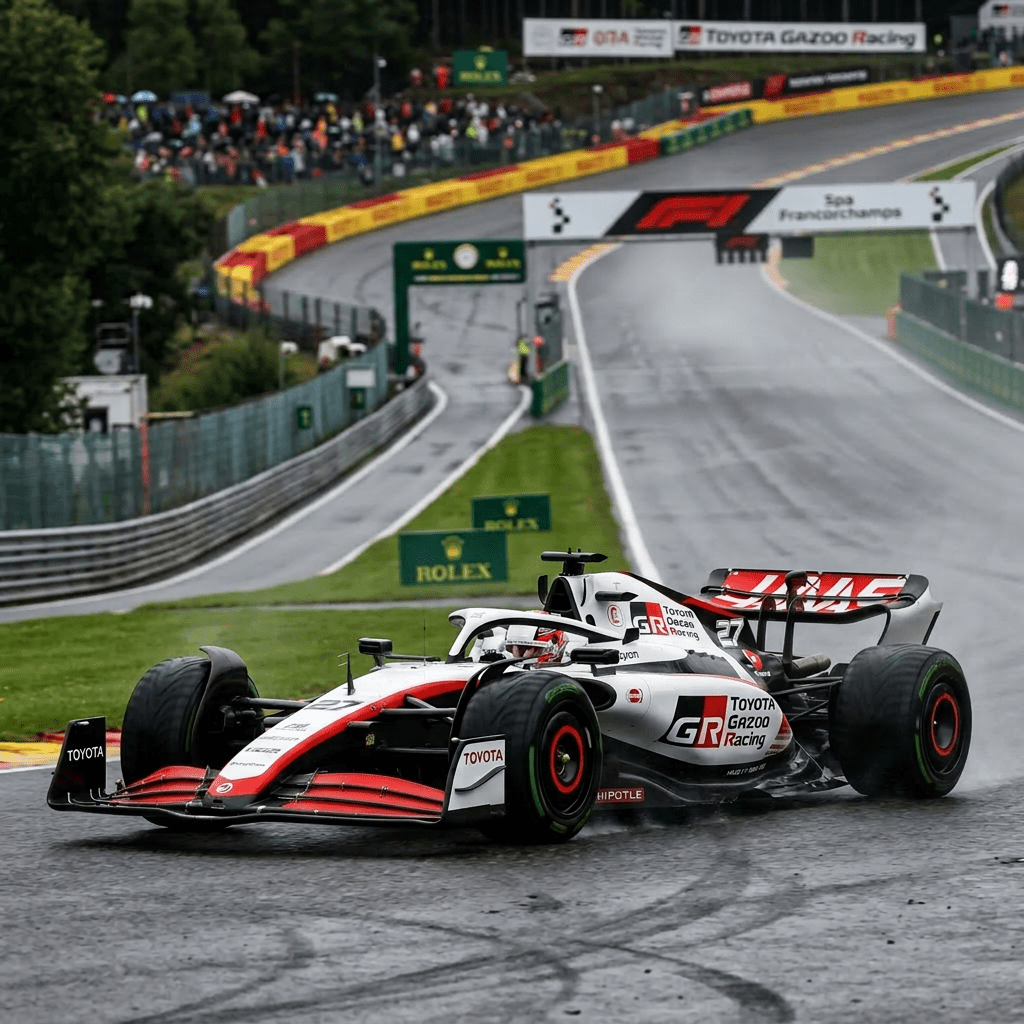
This is a multi-year partnership that began in 2024 as a technical collaboration. In 2026, Toyota Gazoo Racing advanced to become the Haas F1 team’s title partner. The financial terms of this partnership remain undisclosed. However, it replaces Haas F1 Team’s previous agreement with MoneyGram (the team’s F1 title partner from 2023-2025), which was valued at $20 million per season.
What Is Toyota Gazoo Racing?
Toyota Gazoo Racing is Toyota’s official global motorsport division and performance brand. They are focused on developing better road cars. They do that through participating in racing such as Formula 1, WRC, WEC, and Rally. They combine motorsport technology with road car development to produce performance-oriented vehicles.
Why Haas F1 and Toyota Gazoo Racing Are a Strong Match
The Technical Aspect
This partnership is technically focused, with both partners looking to improve their engineering and manufacturing capabilities.
Haas is looking for Toyota to help in multiple areas. The first is in the design of their Formula 1 car, along with providing manufacturing and technical services. This includes aerodynamic development, simulator access, and staff training. Toyota will also help with the design and manufacturing of carbon fiber components for the car. In addition to that, Toyota will act as a data pipeline, helping with real-time analytics by collecting large volumes of race data and using it for race strategy and overall performance improvements.
The biggest thing Toyota is getting out of this partnership is exposure to a Formula 1-level engineering environment. This gives their engineers the chance to take part in aerodynamic development, high-performance design cycles, and more extreme testing environments than they would typically see. This partnership also gives Toyota’s drivers a pathway to Formula 1, with test opportunities and exposure to F1 machinery and standards. Another benefit is that they will be able to learn how Haas collects and analyzes data, giving them insight into Formula 1-level data and analytics processes.
The Japanese Market/Driver Pipeline
This partnership also gives Haas the chance to tap into the Japanese market, which is a market that has been mostly untouched by Haas before bringing in Toyota as a partner. With Toyota now involved, this could help open the door to other large Japanese companies that could become future partners, such as Sony, Mitsubishi, and Nintendo.
This partnership also gives Haas a new driver pipeline that Toyota wants them to use and develop. This will be achieved in two ways. The first is through training drivers, who will help test the Formula 1 cars and get used to Formula 1 specs and components. This also creates an opportunity for Toyota drivers to become Haas reserve drivers.
In the 2026 season, one of Haas’s reserve drivers is Ryo Hirakawa. Hirakawa is a key member of Toyota Gazoo Racing and a multi-race winner in the FIA World Endurance Championship. This position gives him the chance to drive during a race weekend in one of the practice sessions across the Formula 1 calendar, and also step in to race for Ollie Bearman or Esteban Ocon if they are not fit to drive.
There was also a recent report that Haas tried to bring in Yuki Tsunoda as one of their drivers for the 2025 season. This would have brought the only Japanese driver on the grid at the time to Haas as one of their full-time drivers. Helmut Marko (Red Bull Racing F1 Advisor) eventually nixed this move while he was still at Red Bull Racing. With Marko departing at the end of the 2025 season, and Tsunoda now being being demoted to Red Bulls reserve driver and not on the grid, this is an avenue that Haas could look to re-engage in if they want to bring a Japanese driver back onto the grid.
Fan Engagement
The fan engagement for this partnership is a little different than many other partnerships. They are looking to enhance fan engagement through increased competitiveness. They are thinking that the more competitive the team is, the more engagement they will get from their fans. While this does make sense, I think this is a part of the partnership that still needs to improve.
Relying only on performance can be limiting. Yes, better results will naturally bring more attention, but in Formula 1, a lot of fan interest also comes from storylines and personal connections. This is something that Haas and Toyota could take more advantage of.
One suggestion is to create more storylines around the team. They could do this by focusing on drivers like Ryo Hirakawa and telling his story of how he got to a Formula 1 reserve driver role. Going more in-depth on his background and progression would help fans understand who he is and give them a reason to follow him. This also helps build more interest in the team as a whole, not just their results.
Another suggestion is more events and activation. This could be achieved through fan events, Toyota dealership activations, and motorsport festivals or car shows. These types of events give fans a more direct connection to the team and make the partnership feel more real. It also helps bring in new fans who may already follow Toyota but not necessarily Haas or Formula 1.
Overall, while increased competitiveness will help with fan engagement, I think adding more storytelling and more direct fan interaction would make a big difference and help grow the team’s fanbase even more.
Key Quotes from Haas F1 and Toyota Gazoo Racing
Toyota
“By taking our partnership with Haas another step forward next year, TGR’s ‘People, Product, Pipeline’ mantra will accelerate in a way we have never seen before”. (Akio Toyoda, Chairman, Toyota Motor Corporation)
“Seeing this transformation moved me deeply. And today, I can say this with confidence: Toyota has finally begun to move – really move. I would like to express my sincere gratitude to Gene Haas and Ayao Komatsu for standing alongside our young members, believing in their potential, and facing the future with the same passion and perspective. (Akio Toyoda, Chairman of Toyota Motor Corporation)
Haas
“Our working relationship to-date has been everything we hoped it would be. It’s been evidenced through our successful TPC running this season, but there’s been so much more going on behind the scenes, too, including the development and installation of the simulator at our Banbury facility for 2026. The cultivation of personnel, all working collaboratively between Haas F1 Team and TGR, has benefited us greatly, and that’s something that will only increase as our partnership matures. We’re excited to further grow with the likes of our driver program too, and it’s been encouraging to see the depth of talent TGR is backing in that process.” (Ayao Komatsu, Team Principal of Haas F1 Team)
Conclusion
At its core, this partnership between Haas F1 Team and Toyota Gazoo Racing is not about short-term headlines or flashy marketing. It is focused on long-term growth through shared technical ambition. Haas gains access to stronger engineering support, manufacturing capabilities, and a more developed data infrastructure, while Toyota re-enters the Formula 1 environment in a way that fits its approach of learning through competition.
What makes this collaboration stand out is how balanced it is. Haas is able to address key performance gaps, while Toyota gains something it has been missing since leaving Formula 1: real, hands-on exposure to the highest level of motorsport. When you also factor in the expansion into the Japanese market and the development of a clear driver pipeline, this becomes more than just a technical partnership. It starts to look more like a long-term strategy for both sides.
If this is executed properly, the success of this partnership won’t just be measured in lap times or points finishes, but in how both organizations develop over time. For Haas, that means becoming a more competitive and complete team. For Toyota, it means continuing to build a stronger connection between motorsport and road car development.
In a sport where small improvements can make a big difference, this partnership has the potential to deliver steady progress over time. It may not be the most high-profile partnership on the grid, but it is one that could have a significant impact if both sides are able to fully leverage it.


Leave a Reply